Ancestral Healing
What Is Holistic Health for Black Women and Why It Looks Different
Aja Diack ·
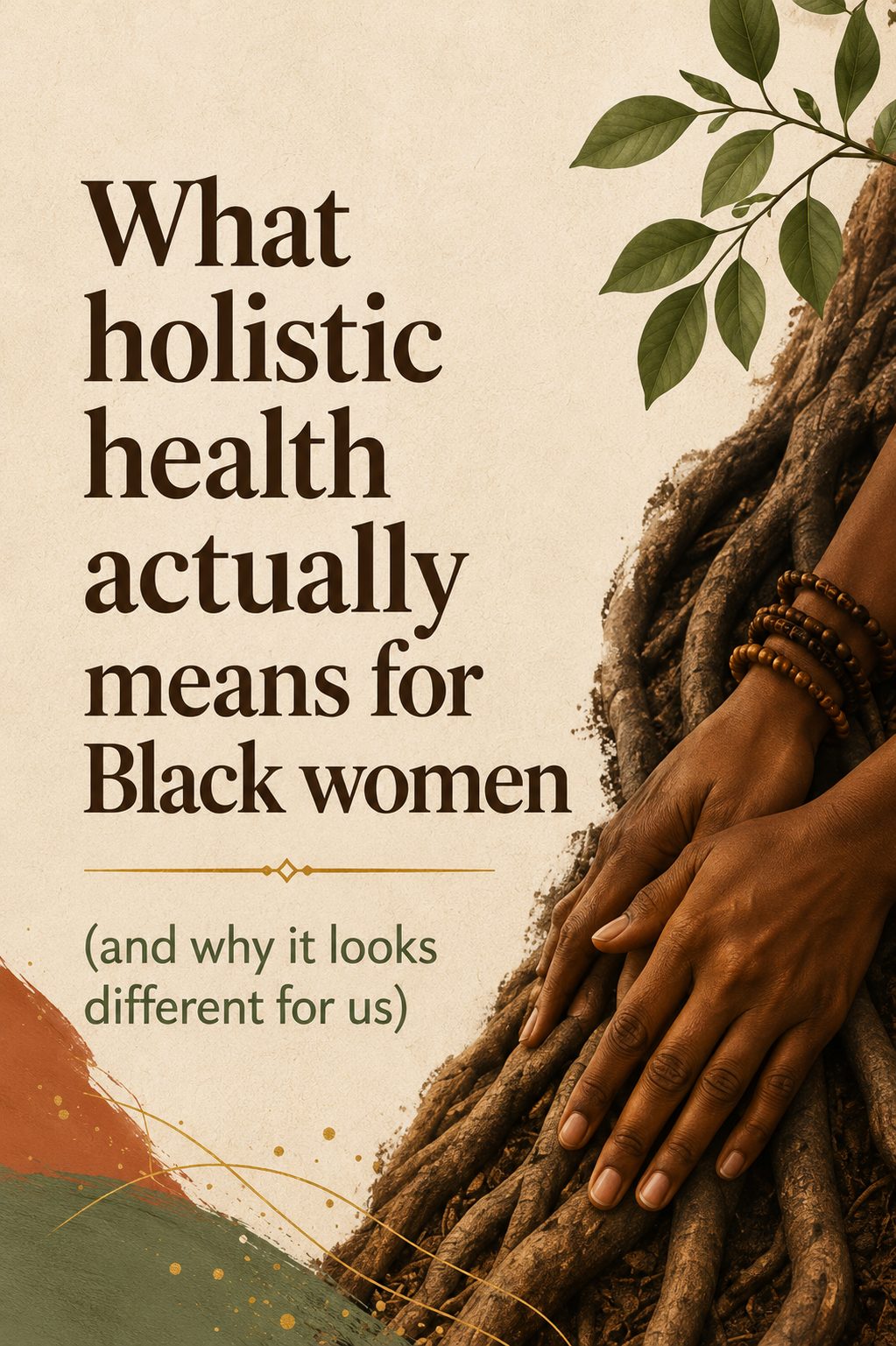
When people hear the words holistic health, they often picture a certain image. Linen clothing. Matcha lattes. Meditation apps. A particular kind of quietude that feels borrowed from somewhere else, curated for someone else.
For Black women and women of the African diaspora, that image can feel like a door that was never quite built for us.
But holistic health, real holistic health, is ancient. It did not begin in a wellness studio. It began in the compounds of our grandmothers, in the herb bundles hung to dry above the doorway, in the prayers spoken over water before it was given to a sick child. It began long before it had a name anyone was selling.
So what does holistic health actually mean for us? And why does it look different when we bring our full selves to the conversation?
The Body Is Not Separate From the Story
Conventional medicine tends to treat the body as a collection of parts. You have a symptom, you are given a remedy for that symptom. The connection between what you carry emotionally, spiritually, historically, and what your body expresses physically, is rarely part of the conversation.
Holistic health asks a different question. Not just what is happening in your body, but what has your body been asked to hold?
For Black women, that question is not abstract. It is rooted in generations of carrying more than any one body should hold. Stress that is chronic and culturally specific. Grief that has not always had space to move through. A healthcare system that has historically minimized our pain and dismissed our knowing.
When we approach healing holistically, we begin to honor all of that. Not to rehearse suffering, but to move through it with intention and tenderness.
What Holistic Health Actually Includes
A truly holistic approach to health weaves together several dimensions that conventional medicine often treats in isolation.
Physical nourishment goes beyond counting nutrients. It asks which foods are ancestrally familiar to your body, which herbs your lineage has used for centuries, which ways of eating feel like homecoming rather than discipline.
Emotional and mental wellbeing includes not just managing stress, but understanding where it lives in the body, learning to recognize patterns that were inherited, and creating space for feelings that were never given permission to exist.
Your free 7-day Queen Reset guide. Get the free guide
Spiritual grounding is not about religion, though it can include it. It is about connection, to something larger than the immediate crisis, to the thread of who you are that runs deeper than your circumstances, to the wisdom that lives in your lineage.
Community and relational health matters in ways that individualistic wellness culture consistently undervalues. We are not meant to heal alone. The village was always part of the medicine.
Why Cultural Roots Are Not Optional
One of the most powerful shifts a woman can make in her healing journey is to stop trying to fit herself into frameworks that were not designed with her in mind, and start drawing from the wells that already belong to her.
West African healing traditions have always understood the body, the spirit, and the community as inseparable. Plants like moringa and baobab are not trendy superfoods. They are part of a food heritage passed down through hands and memory. Practices of communal gathering, storytelling, and ritual are not supplements to healing. They are the healing.
When we return to these roots, something often happens that no supplement protocol can replicate. Women describe it as recognition. A settling. As if the body finally exhales because it is being spoken to in a language it has always known.
Healing as Reclamation
Holistic health, for women of the African diaspora, is not a trend to adopt. It is a lineage to reclaim.
It is the practice of listening to your body before it has to shout. It is choosing foods that carry memory as well as medicine. It is allowing grief its full expression so it does not become disease. It is building a life that honors not just your ambitions, but your wholeness.
It looks different for us because our history is different, our bodies have been differently burdened, and our healing requires a different kind of courage. Not the performance of strength, but the willingness to return to softness. To roots. To self.
That is where the transformation begins. Not in a protocol, but in a homecoming.
If you are ready to explore what holistic healing could look like in your own life, I invite you to book a free discovery call. We will talk about where you are, what you are carrying, and what it might mean to begin coming home to yourself.