Ancestral Nutrition
Sacred Nutrition: What African Food Traditions Teach Us About Nourishing Body and Spirit
Aja Diack ·
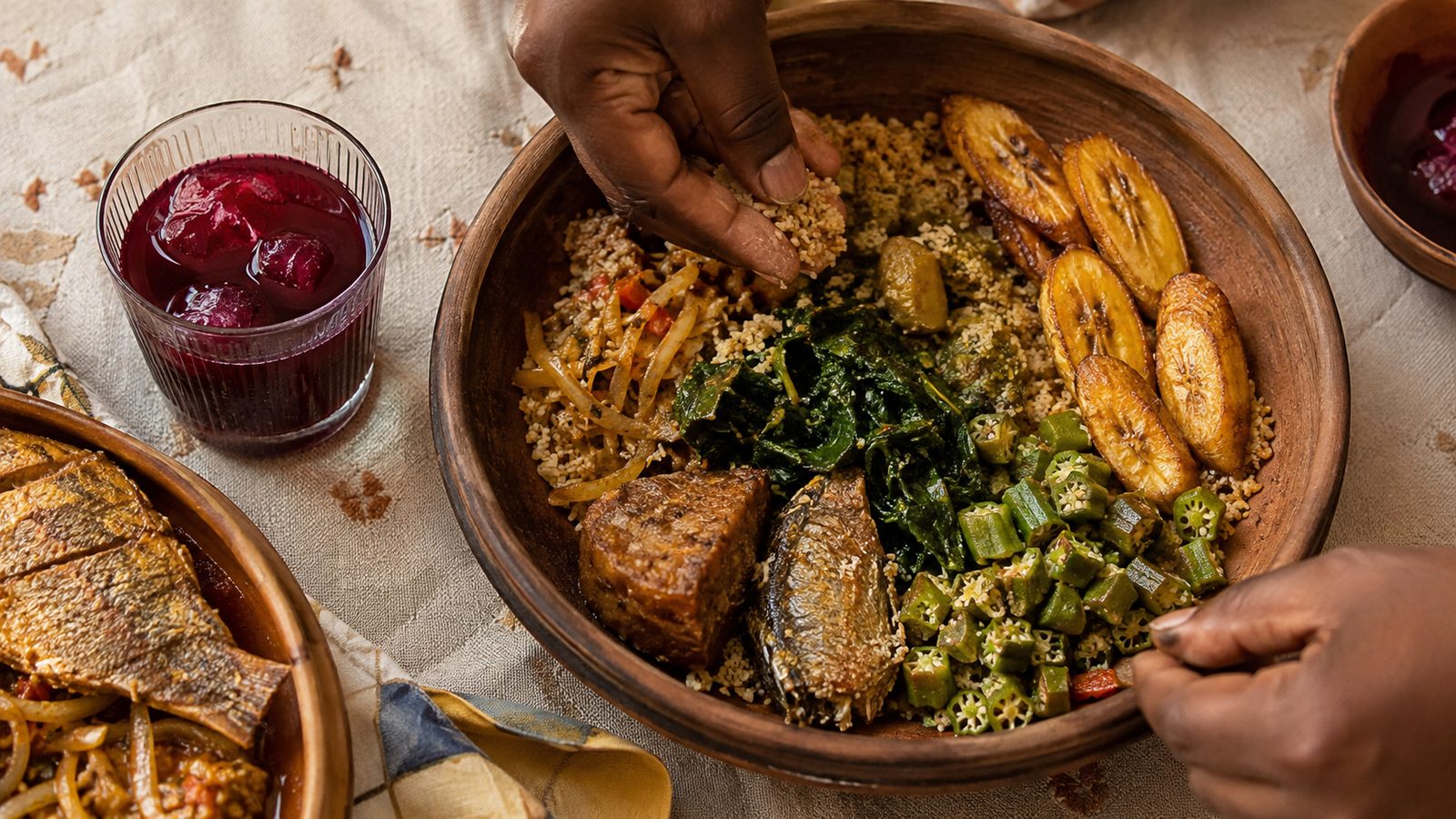
Food in West African tradition has never been only food.
It has been medicine, ceremony, memory, and love. It has been the language through which elders communicated care, through which communities marked passage, through which the body was told: you are seen, you are tended, you belong.
When we speak of sacred nutrition, we are not speaking of a particular dietary system. We are speaking of a relationship with food that modern culture has largely severed: the understanding that what we eat carries meaning beyond its macronutrient content, and that how we eat is inseparable from why and with whom.
Returning to this relationship is, for many women, one of the most quietly revolutionary acts of self-care available.
Why I Teach Nutrition This Way
As a Certified Holistic Health and Life Transformation Coach, I look at nutrition through two lenses at once: the modern, evidence-informed lens I was trained in, and the West African, specifically Senegalese, food wisdom I was raised in. Neither lens replaces the other. My holistic-coaching training gives me a framework for how nutrients, stress, sleep, and the nervous system interact in the body. My lineage gives me the specific dishes, ingredients, and eating practices that framework can be applied to, with real names and real histories instead of generic "superfoods."
That combination is the point of this article. I am not asking you to choose between ancestral wisdom and modern nutrition science. I am showing you where they support each other, and being honest about the difference between what is well established, what is traditional practice, and what is still being studied.
The Wisdom in the Ingredients
West African food traditions include many nutrient-dense staples: millet, fonio, sorghum, black-eyed peas, okra, sweet potato, plantain, and a wide range of leafy greens. Depending on the ingredient and preparation, these foods can contribute fiber, iron, magnesium, B vitamins, and other plant compounds to the diet.
The spices and aromatics used across West African cooking also deserve careful attention. Ginger has been studied in human trials for several uses, including nausea, digestive function, and inflammatory markers, although the strength of evidence varies by outcome and preparation. Cloves contain eugenol, a compound with documented antimicrobial activity in laboratory and food-science research. That does not mean cloves should be treated as a medicine for infection. Black pepper contains piperine, which has been studied for its effect on the absorption of compounds such as curcumin, but the research does not justify treating ordinary culinary combinations as guaranteed therapeutic formulas.
Our ancestors did not need the language of clinical trials to develop sophisticated food traditions. They learned through generations of cultivation, preparation, preservation, taste, availability, and observation. Modern research can help us understand some aspects of those practices, while other parts remain cultural knowledge rather than proven medical mechanisms.
Your free 7-day Queen Reset guide. Get the free guide
The Way of Eating Matters As Much As What Is Eaten
In many West African households, eating together is part of the culture of the meal itself. The shared bowl is not only about food. It can represent connection, hospitality, rhythm, and belonging.
Research on shared meals suggests associations with social connection, wellbeing, and, in some settings, dietary quality. We also know that stress can influence gastrointestinal function through the brain-gut connection. What the evidence does not allow us to say is that eating communally automatically improves nutrient absorption or that eating alone makes the same food less nourishing.
Sacred nutrition, as I use the term, includes reclaiming the table as a place where we can slow down, pay attention, connect, and eat with intention. Those practices matter even when we do not turn them into medical claims.
Cooking as an Act of Ancestral Connection
For women of the African diaspora who may feel some distance from the food traditions of their lineage, cooking ancestral recipes is one of the most accessible paths back into connection.
You do not have to have learned these recipes from your grandmother directly. Recipes can be found, learned, imperfectly attempted and slowly mastered. The act of making thieboudienne for the first time in an unfamiliar kitchen, of learning to cook fonio with the care it deserves, of steeping bissap with ginger and tasting it before you sweeten it: these are acts of recovery.
Each meal becomes a conversation across time. A way of saying to those who came before: I remember. I honor. I continue.
This is holistic coaching guidance rooted in food tradition, not a substitute for care from a doctor or registered dietitian, especially if you are managing a diagnosed condition. For more on nourishing your body and spirit with ancestral wisdom, join my weekly newsletter. I share holistic nutrition guidance, recipes, and reflections for women walking this path.