Ancestral Nutrition
The Sacred Grains: How Traditional African Cereals Support Women Through Perimenopause
Aja Diack ·
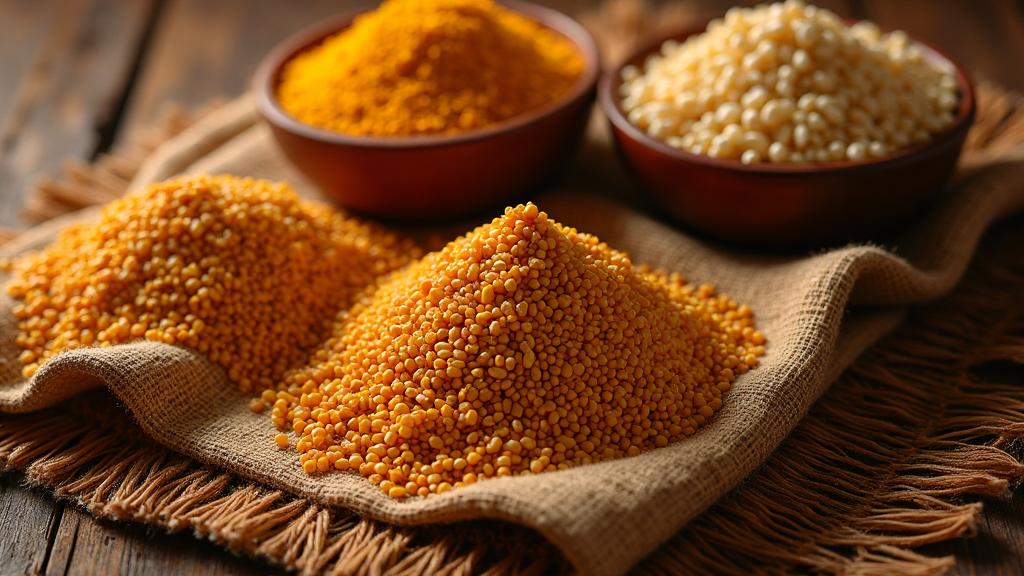
Before quinoa had a marketing team… we had our grains.
Before oat milk became a lifestyle… we had our bowls.
And before anyone called it “hormone-balancing nutrition”…
our grandmothers were already doing the work.
I didn’t fully understand this growing up.
Like many of us, I moved away from those foods, chasing what looked modern, convenient, and “healthy.”
Until my body started speaking.
The fatigue.
The shifts.
The quiet discomforts no one really prepares you for.
And suddenly…
I found myself craving the very foods I once overlooked.
Not randomly.
Not emotionally.
Intelligently.
Because the body remembers what the mind forgets.
And during perimenopause…
it often calls us back home.
The Ancestral Kitchen Held Real Knowledge
Across Senegal, Mali, Burkina Faso, Guinea, Nigeria, Ghana, and the wider Sahel region, traditional grains formed the foundation of daily nourishment for centuries. Millet, fonio, and sorghum were not chosen by accident. They were cultivated, prepared, and shared with deep knowledge of what the body needed at different stages of life.
Our grandmothers did not have lab reports or clinical trials. They had observation, intuition, and thousands of years of accumulated wisdom. They paid attention to what nourished a woman in each season of her life.
They didn’t call it imbalance. They just knew how to restore a woman.
And somewhere along the way, we stopped listening.
Today, nutrition research is paying closer attention to what these grains contain: fiber, protein, minerals, and plant compounds that make them a steady, nourishing base for meals in any season of life, including this one.
This is not new.
This is remembered.
Fondé: The Morning Ritual We Need to Reclaim
Fondé. Bouillie de mil. Koko. Hausa Koko. Pap. Whatever your family called it, this warm, thick millet porridge was more than breakfast. It was a daily act of nourishment that held families together.
That bowl your mother prepared before sunrise, the one that kept you full until midday, the one that felt like a hug in a bowl. It was doing more than filling your stomach.
What millet does for us during perimenopause:
Millet is a whole grain with fiber, protein, and minerals, and a warm bowl of it makes a steadying start to the day. Not a treatment. A support. The way a grandmother’s hand on your back is not the same as carrying the weight for you, but it helps you stand taller.
Millet also brings magnesium and phosphorus, minerals your bones rely on, and bone health deserves more attention as estrogen declines. No single grain protects your bones on its own, but a whole-grain base is a good place to build from.
As a whole grain, millet tends to release energy more slowly than refined flour, which can mean steadier energy through the morning. Its protein also helps you stay full.
And maybe… it becomes the moment you stop fighting your body and start listening to her again.
A note on preparation: Traditional fondé is often heavily sweetened. Many women notice that a very sweet breakfast leaves them less steady by midmorning. Consider sweetening gently with honey, mashed banana, or blended dates. Add ground baobab powder for vitamin C, a pinch of ginger or cinnamon for warmth, and top with nuts or seeds for protein and healthy fats.
The bowl becomes more than food. It becomes your morning ritual of self-care.
Your free 7-day Queen Reset guide. Get the free guide
Fonio: Africa’s Oldest Grain, Now the World’s Newest Superfood
Fonio. Acha. Iburura. Findi. “Hungry rice.” The world is just now discovering what West Africa has known for five thousand years.
Fonio is considered one of the oldest cultivated cereals in West Africa, and it has been part of the region's kitchens for a very long time.
Fonio stands out for its amino acids, including methionine and cystine, which many other cereals carry in smaller amounts. It adds protein and variety to your plate during a season when your body benefits from both.
It is also naturally gluten-free and cooks in minutes, which makes it an easy grain to bring back into a busy week.
The Bambara people of Mali say: “Fonio never embarrasses the cook.” It is forgiving, versatile, and nourishing, qualities we might aspire to embody ourselves during this season of transformation.
Sorghum: The Giant Grain With Giant Benefits
Sorghum. Gros mil. Dah. Jowar. Durra. Guinea corn. The tallest grain in our fields, and one of the most generous.
Across the Sahel, sorghum has fed generations of families. It appears as warm bouillie de sorgho at breakfast, as thick tô or ugali served with stews, as flour you can mix into your baking for a more nourishing loaf.
Your body is not failing you. It’s trying to guide you.
Heart health deserves more attention in midlife, and fiber-rich whole grains belong to the eating patterns most health organizations recommend for it.
Sorghum, especially the darker varieties, contains polyphenols that researchers are studying with real interest. Its fiber also feeds the bacteria in your gut, one more reason to bring it back to the table.
The Colonial Shift We Must Undo
Here is a truth that deserves more conversation: white rice and white bread are not our traditional foods.
Our ancestors ate millet. Sorghum. Fonio. Whole grains, close to the field. The shift to refined white rice and white flour came through colonization, and it has not served our health.
And yet… many of us are trying to care for our bodies with foods that were never part of our grandmothers' tables.
Refined carbohydrates digest quickly and carry less fiber and fewer minerals than whole grains. Many women find that leaning on them leaves their energy and mood less steady.
Returning to our grains is not just a dietary choice. It is an act of cultural reclamation. It is saying: the wisdom of my grandmother’s kitchen matters more than the convenience of a colonial legacy.
Simple Swaps to Begin Today
You do not have to change everything at once. Start with one meal. One swap. One act of intentional nourishment.
Replace your Saturday morning cereal with a bowl of warm fondé sweetened with honey and banana. Add fonio to your soup instead of rice one evening this week. Mix sorghum flour with white flour the next time you bake. These are small shifts with profound cumulative effects.
And the bonus? You will be reconnecting with food your body actually recognizes, food with a long history in your family's kitchens, food your ancestors cultivated with care and consumed with reverence.
This is not about perfection. This is about coming home: to your roots, to your body, to the sacred knowledge that was always yours.
If something in you softened while reading this…
if a part of you felt seen, remembered, or even called out,
that’s not by accident.
Your body is not confused.
It’s communicating.
And this, reconnecting with your roots, your rhythm, and your body’s wisdom,
is exactly the work I guide women through.
Not through restriction.
Not through trends.
But through remembrance.
When you’re ready to stop guessing…
and start understanding what your body has been trying to tell you,
I’m here… when you’re ready to listen differently.