Ancestral Nutrition
The Healing Cup: Traditional West African Drinks for the Perimenopause Season
Aja Diack ·
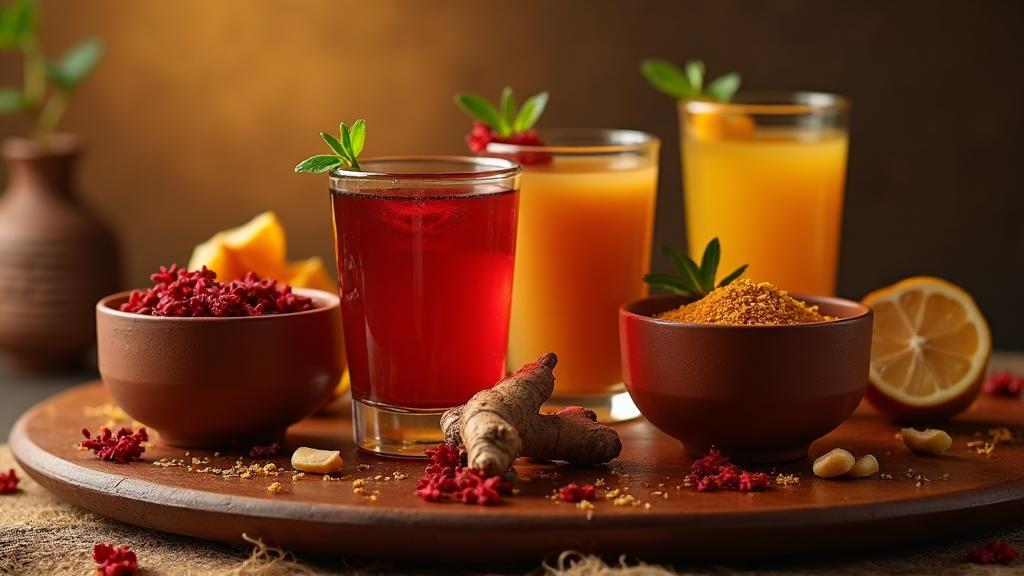
Before the supplement aisle satisfies you…
before the pharmacy becomes your first instinct…
before you Google one more symptom at 2 a.m., There was a cup.
A cup your grandmother made without thinking twice.
Not because she had a certification.
Not because someone told her it was "trending."
But because she knew.
The deep crimson of bissap at celebrations.
The fiery warmth of gnamakoudji on cool mornings.
The gentle, woody calm of kinkeliba at dawn.
These were not wellness fads.
They were traditions rooted in centuries of accumulated knowledge about how to keep a woman's body balanced, strong, and at peace.
And somewhere along the way… we stopped drinking them.
We replaced the cup with a capsule.
The ritual with a routine.
The knowing with Googling.
Until the body started speaking.
The hot flashes.
The sleepless nights.
The mood that shifts without warning.
And suddenly…
we find ourselves craving the very drinks we once dismissed.
Not randomly.
Not emotionally.
Wisely.
Because the body remembers what the mind forgets.
This is not new.
This is remembered.
Bissap, The Queen of Our Drinks
Bissap. Zobo. Karkadé. Dabileni. Whatever you call it across Senegal, Mali, Burkina Faso, Nigeria, Ghana, or Guinea, this deep crimson drink made from dried hibiscus flowers is perhaps the most widely loved beverage across West Africa.
And for women in perimenopause, it is nothing short of an ally.
Why we keep it close:
- Refreshing served cold, especially on hot days
- Can interact with blood pressure medication, so check with your provider if you take any
- Contains antioxidant plant compounds and some vitamin C
- Easy to make a daily ritual, and the pause itself can be calming
Your body is not failing you. It's trying to guide you.
How to drink it wisely:
- Two cups per day, hot or cold
- Steep dried hibiscus flowers for five to ten minutes
- Go easy on the sugar. Many women feel steadier with less of it
- Try sweetening with a small amount of honey, a splash of pineapple or orange juice, or, as your palate adjusts, drinking it unsweetened
- The tartness grows on you
A word of care: If you are taking blood pressure medication, blood thinners, or hormone therapy, consult your healthcare provider before drinking large amounts of hibiscus, as it can interact with these treatments.
Ginger, The One That Warms
Whether you know it as Gnamakoudji, Nyamakou, or Tangawisi, ginger juice is far more than a refreshing glass at the market.
Why we keep it close:
- Ginger is well studied for easing nausea
- Warming and easy to add to tea, soups, and juices
The sugar conversation we need to have:
Traditional ginger juice recipes use a great deal of sugar. A regular glass of Gnamakoudji can contain as much sugar as a can of soda.
The solution is not to abandon this beloved drink, but to transform its preparation:
- Cut the sugar by half initially, then reduce further over time
- Sweeten with blended dates for natural sugar paired with fiber
- Use a small amount of honey, it is sweeter, so you need less
- Add pineapple or orange for natural sweetness
- Try it with just lemon, the ginger flavor shines
And yet… many of us are trying to heal our bodies using drinks our habits have turned against us.
Kinkeliba, The Morning Tea
Kinkeliba. Seh-haw. Sekhew.
If you grew up in Senegal, Mali, Burkina Faso, Guinea, Gambia, or Benin, you know this gentle, woody tea. Your grandmother brewed it in the morning as naturally as the sun rose.
For women in perimenopause, kinkeliba is quietly extraordinary.
Why we keep it close:
- A gentle, woody tea many families drink at breakfast
And maybe… this is where the healing begins. Not with a new protocol. But with an old cup.
Your free 7-day Queen Reset guide. Get the free guide
How to prepare kinkeliba:
- Boil a small handful of dried leaves in one liter of water for three to five minutes
- Remove from heat and steep for twenty minutes
- Strain and drink hot or cold
- A squeeze of lemon is a beautiful addition
- Traditionally consumed at breakfast, the perfect morning ritual
Moringa, The Tree of Life
Known as nébéday in Wolof and zogale in Hausa, moringa is one of the most treasured plants in many West African kitchens.
Why we keep it close:
- The leaves are a good source of calcium and iron
Ways to enjoy moringa:
- Make it as a tea
- Add the powder to smoothies
- Cook the fresh leaves into your meals
Lemongrass, The Beloved Citronnelle
Lemongrass is one of the best plants for our nervous systems.
Why we keep it close:
- Fragrant and soothing to sip in the evening
Simply boil the stalks for ten minutes and let the aroma fill the room.
Baobab, The Ancestral Superfruit
The tangy, creamy bouye we love, baobab is a powerhouse of nourishment.
Why we keep it close:
- The dried fruit pulp is rich in vitamin C
- Also brings some calcium
- Its fiber feeds the bacteria in your gut
Reduce the sugar dramatically from traditional preparations, and let the fruit's natural tanginess carry the drink.
The answers were never far. They were just waiting for us to come back.
The Sugar Truth Our Bodies Need to Hear
Across all of these sacred drinks, there is one pattern we must address with honesty and love: the sugar.
We love our sweet drinks. Our sweet bissap. Our sweet gnamakoudji. Our sweet bouye. They are part of our culture, our celebrations, our comfort.
And this is not about shame or deprivation.
But during perimenopause, sugar interacts with our bodies differently than it did before:
- Shifting estrogen can affect how the body processes insulin
- Blood sugar can swing more after sugary food, which many women feel as energy dips
Our traditional drinks are medicine. But the sugar we add to them can cancel out many of their benefits.
The answer is not to abandon our traditions. The answer is to honor them more fully, to return to the way our grandmothers originally consumed these drinks, with far less sweetness than modern habits have normalized.
Small shifts over time make a profound difference. One glass of sweet bissap at a family gathering will not hurt you. But the daily habit of heavily sweetened drinks accumulates.
Our grandmothers drank these plants with much less sugar than we do today. Let us return to the roots, literally.
Coming Home to What Was Always Ours
The healing was never somewhere else.
It was never in a supplement from a foreign country or a trend born on social media.
It was in our grandmothers' kitchens.
In their gardens.
In their knowledge, passed down through generations of women who understood the body, the seasons, and the sacred transitions of a woman's life.
When you brew a cup of kinkeliba, you are not just making tea.
You are participating in a lineage of women who cared for themselves and each other with plants, with intention, with love.
If something in you softened while reading this…
if a part of you felt seen, remembered, or even called out, that's not by accident.
Your body is not confused.
It's communicating.
And this, reconnecting with your roots, your rhythm, and your body's wisdom, is exactly the work I guide women through.
Not through restriction.
Not through trends.
But through remembrance.
When you're ready to stop guessing…
and start understanding what your body has been trying to tell you,
I'm here… when you're ready to listen differently.