Ancestral Nutrition
The Ancient Grain the Wellness World Just Discovered Was Already on Your Plate
Aja Diack ·
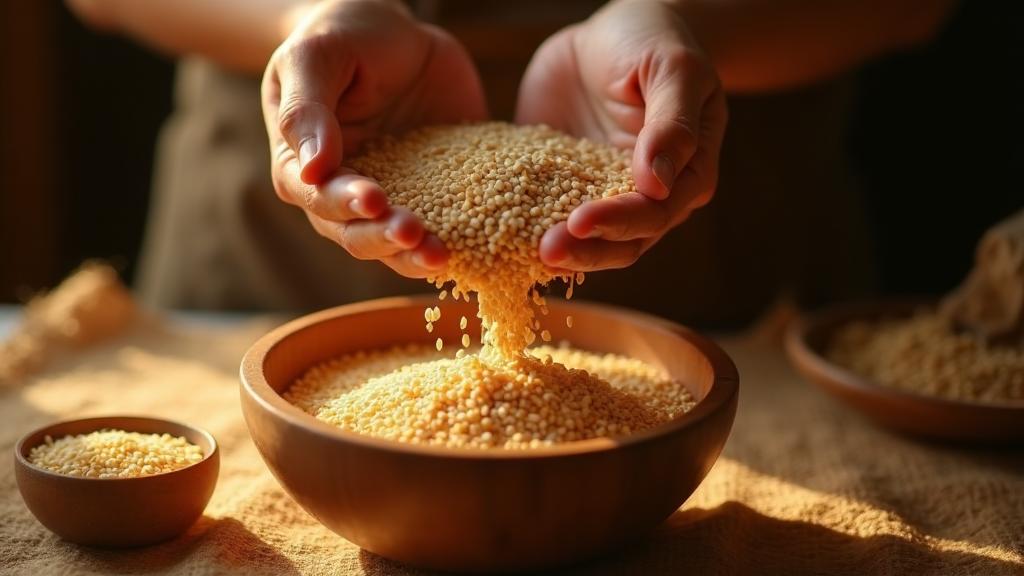
The wellness industry has a pattern. It discovers something that an ancient culture has used for centuries, sometimes millennia, repackages it, gives it a sleek label, and sells it back to the world as a breakthrough.
Turmeric. Baobab. Moringa. And now: fonio.
But this time, I want you to sit with something before the trend cycle swallows it. Before fonio becomes another "exotic superfood" on a shelf in a health food store with a price tag that would make your grandmother laugh.
This grain is yours. It has always been yours. And it has something specific to offer you right now.
A Grain Fit for Royalty
In some places across West Africa, fonio was not everyday food. It was reserved for chiefs, royalty, and special occasions. It marked moments of significance, of gathering, of sacred celebration.
The Bambara people of Mali have a saying: "Fonio never embarrasses the cook." Because this tiny, ancient grain, one of the oldest cultivated cereals in West Africa, is forgiving, adaptable, and quietly extraordinary.
Like many of the women I work with.
Why Fonio Matters During Perimenopause
What sets fonio apart from other grains is not one single quality but a constellation of properties that happen to align beautifully with what a woman's body needs during hormonal transition.
Its amino acid profile is exceptional. Fonio is notable for methionine and cystine, sulfur-containing amino acids that many other cereals carry in smaller amounts. During perimenopause, the liver is working harder than ever, processing fluctuating hormones and environmental toxins. Your skin is changing. Your hair may be thinning. Fonio addresses these concerns from the inside out, quietly and persistently.
Bone health deserves more attention as estrogen declines, and whole grains, greens, and legumes together make a stronger base than any single food.
Your free 7-day Queen Reset guide. Get the free guide
As a whole grain, it tends to give steadier energy than refined white rice. It contains two to three times more protein and fiber than brown rice, supporting muscle mass and digestive health simultaneously.
And it is naturally gluten-free, relevant for the many women who develop digestive sensitivities during hormonal transition.
The Deeper Invitation
But here is what I find most powerful about fonio, and it has nothing to do with nutrition data.
It is the story it tells.
When you cook fonio, you are taking part in a very long lineage. You are connecting with women who cultivated this grain in the dry Sahelian soil, who fed their families with it, who offered it at their most sacred moments. You are saying: the wisdom of my ancestors is not outdated. It is not primitive. It is not less than.
It is medicine.
During perimenopause, a time when many women feel invisible, diminished, past their prime, there is something profoundly healing about connecting with a tradition that says: you come from royalty. This grain was reserved for queens. And you are one.
How to Begin
Steam it like couscous and serve alongside your favorite stew. Cook it as a warm porridge with plant-based milk, banana, and honey for breakfast. Add it to soups for texture and nutrition. Use fonio flour in pancakes.
Start anywhere. Start simply. And let the grain that never embarrasses the cook remind you that there is grace in this season, even when it does not feel that way.
Fonio is just one piece of the ancestral nutrition framework I explore with the women I support through perimenopause. If the idea of healing through your heritage resonates, I invite you to learn more about how we could work together.