Ancestral Wisdom
Bissap: The Sacred Drink Our Grandmothers Poured Long Before Wellness Trends Found It
Aja Diack ·
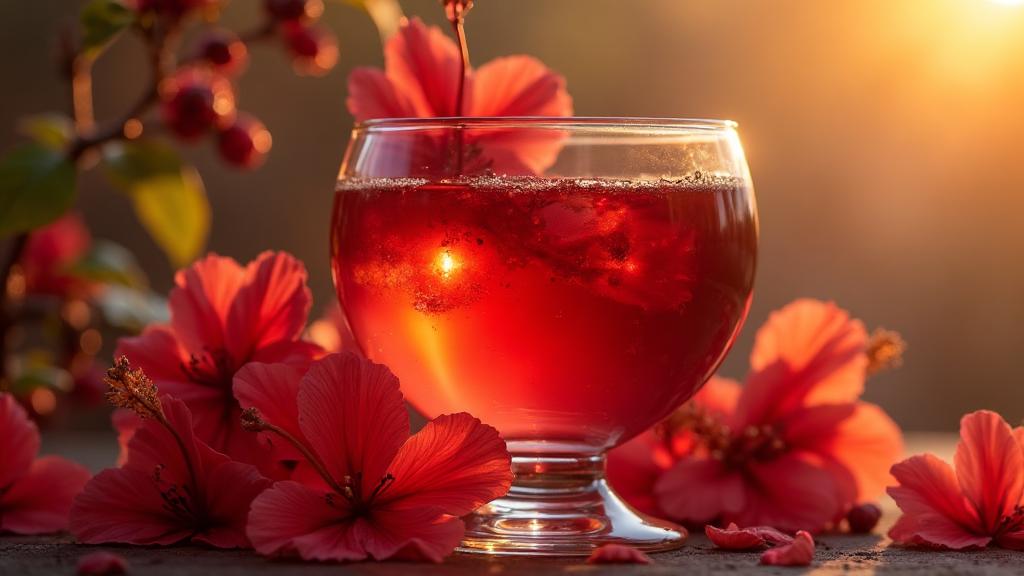
Bissap. Zobo. Karkadé. Dabileni.
Whatever your family calls it, wherever you first tasted it, at a wedding in Dakar, from a street vendor in Lagos, at your grandmother's kitchen table in Bamako, that deep crimson drink made from dried hibiscus flowers is more than a beverage. It is an inheritance.
And during perimenopause, it can become a simple daily ritual worth returning to.
A Drink With a Long Welcome
Across West Africa, Senegal, Mali, Burkina Faso, Nigeria, Ghana, Guinea, and far beyond, bissap has held a place of honor in homes and at celebrations for as long as anyone can remember. It is served cold at parties and warm during the harmattan. It is given to guests as a sign of welcome. It is brewed by mothers for daughters, by grandmothers for the whole family.
It is also a drink worth understanding, especially now, during this season of hormonal change.
What Research Has Looked At
Hibiscus has been studied more than most traditional drinks. The findings are worth knowing, and worth holding with care.
Served cold, bissap is refreshing in the heat, and many women reach for it for exactly that. That comfort is real, even though research has not shown that hibiscus changes hot flashes themselves.
It also deserves respect. Hibiscus can interact with some medications, so if you take blood pressure medication or other prescriptions, talk with your healthcare provider before making it a daily habit.
And there is something harder to measure: the calm that can come with a familiar ritual. That part may have less to do with the flower and more to do with the pause.
Your free 7-day Queen Reset guide. Get the free guide
The Ritual Matters as Much as the Drink
There is healing in the act of preparation. Watching the dried flowers bloom in hot water. The color deepening from pale pink to that rich, unmistakable crimson. The scent rising, tart and floral.
This is not something you rush. This is a moment of pause in a life that rarely pauses.
During perimenopause, your nervous system is often stuck in a state of high alert, scanning for threat, never fully relaxing. The simple ritual of brewing a cup of bissap and drinking it slowly, without multitasking, without urgency, begins to signal safety to your body. It tells your system: we are not in danger. We can rest.
This is how many of our grandmothers cared for themselves and their families. Not with one intervention, but with daily acts of care so woven into life that they were invisible. The brilliance was in the consistency.
One Cup, One Invitation
I am not going to tell you that bissap will solve everything. Perimenopause is a complex, full-body transition that touches every system, hormonal, emotional, spiritual. No single drink, supplement, or practice addresses all of it.
But I will tell you this: starting your morning or ending your afternoon with a cup of unsweetened or gently sweetened bissap is one of the simplest, most beautiful acts of self-care you can offer your body right now. It is affordable. It is accessible. It is yours by birthright.
And if drinking it makes you think of your grandmother, if it connects you to a lineage of women who knew how to care for their bodies with wisdom and grace, then the healing has already begun.
Bissap is one small part of the ancestral wellness I bring into my work with women navigating perimenopause. If you are curious about what a holistic, culturally rooted approach could look like for you, I would love to share more. Visit the Queen's Library or explore working together.